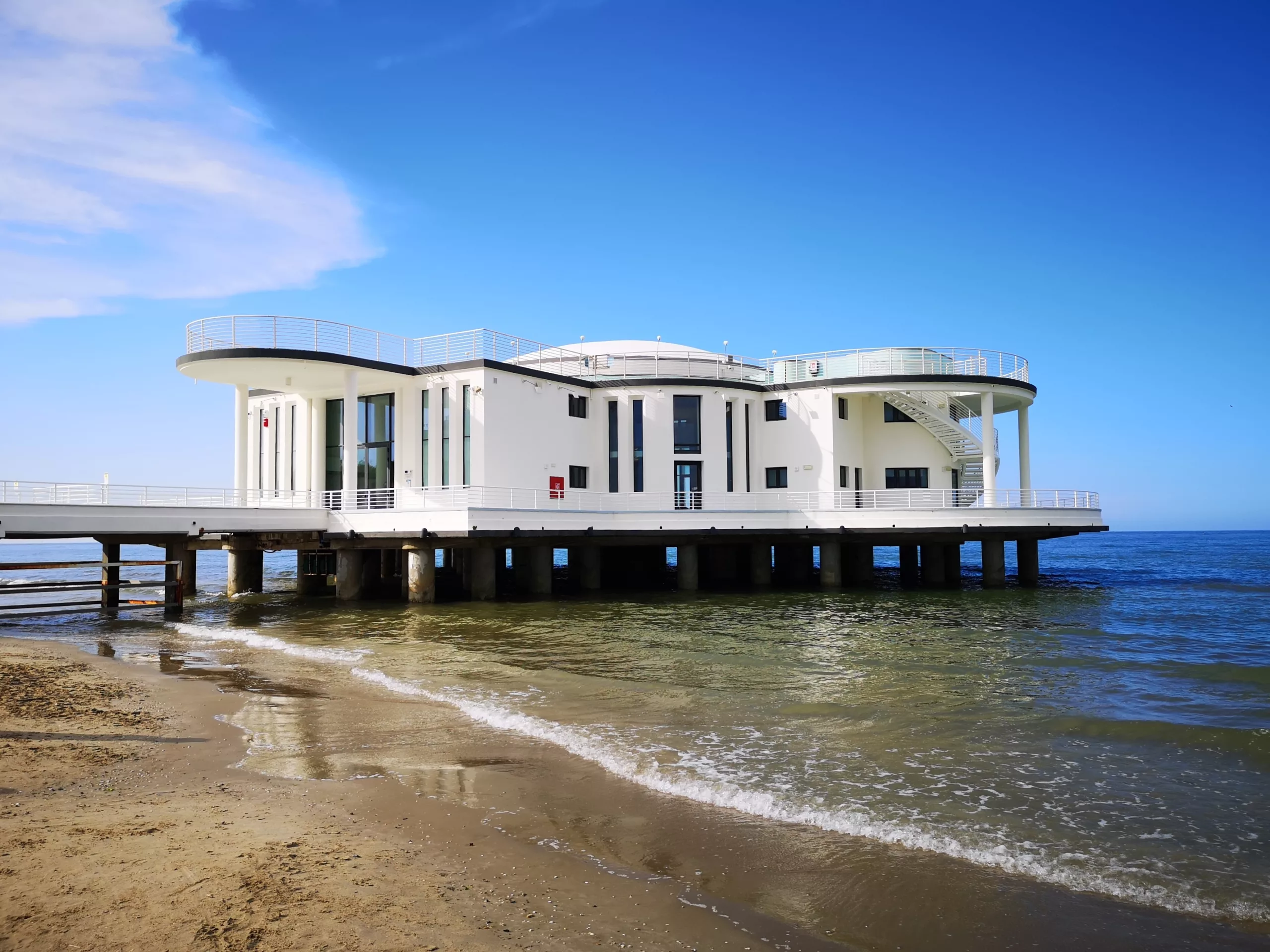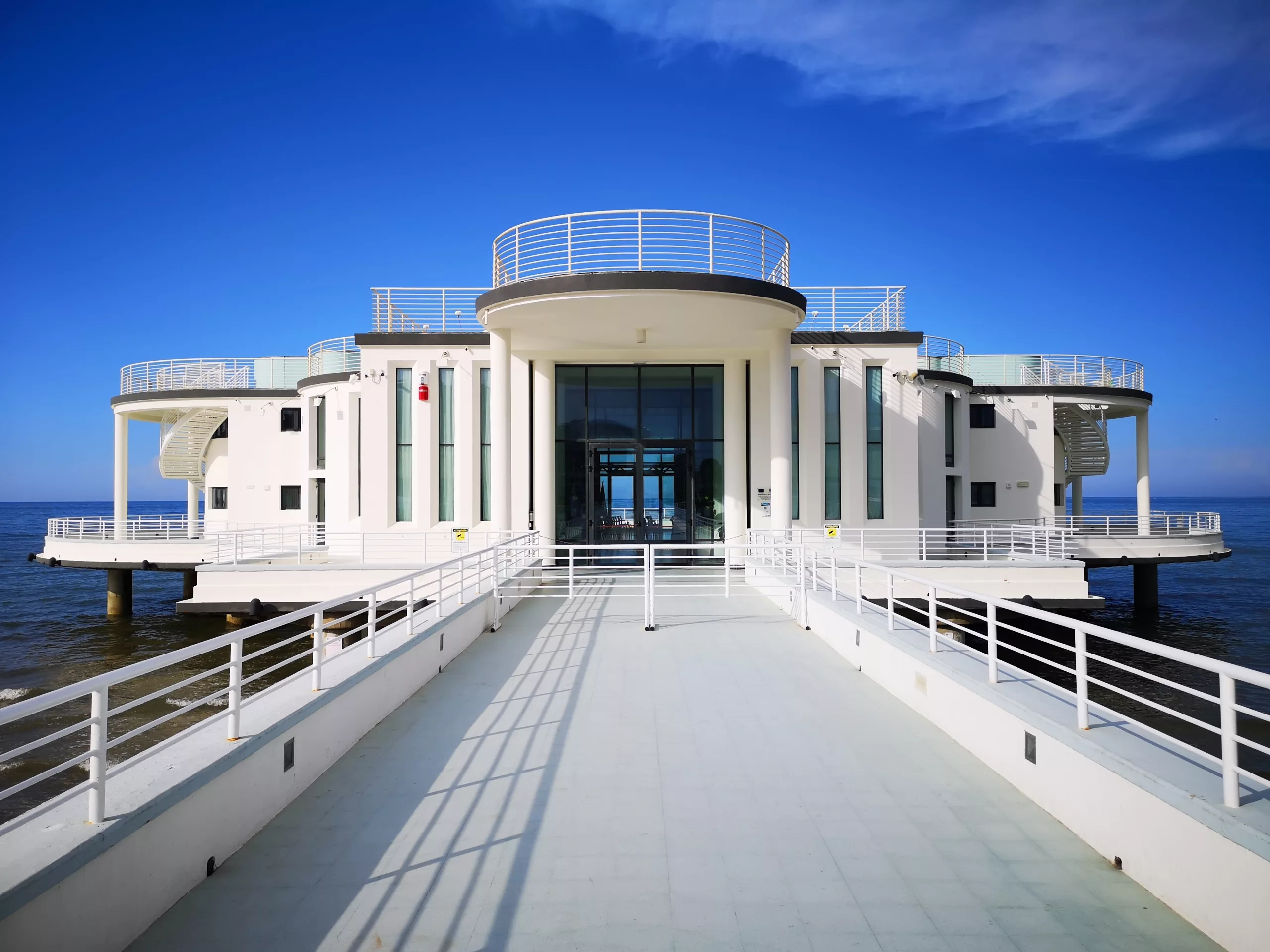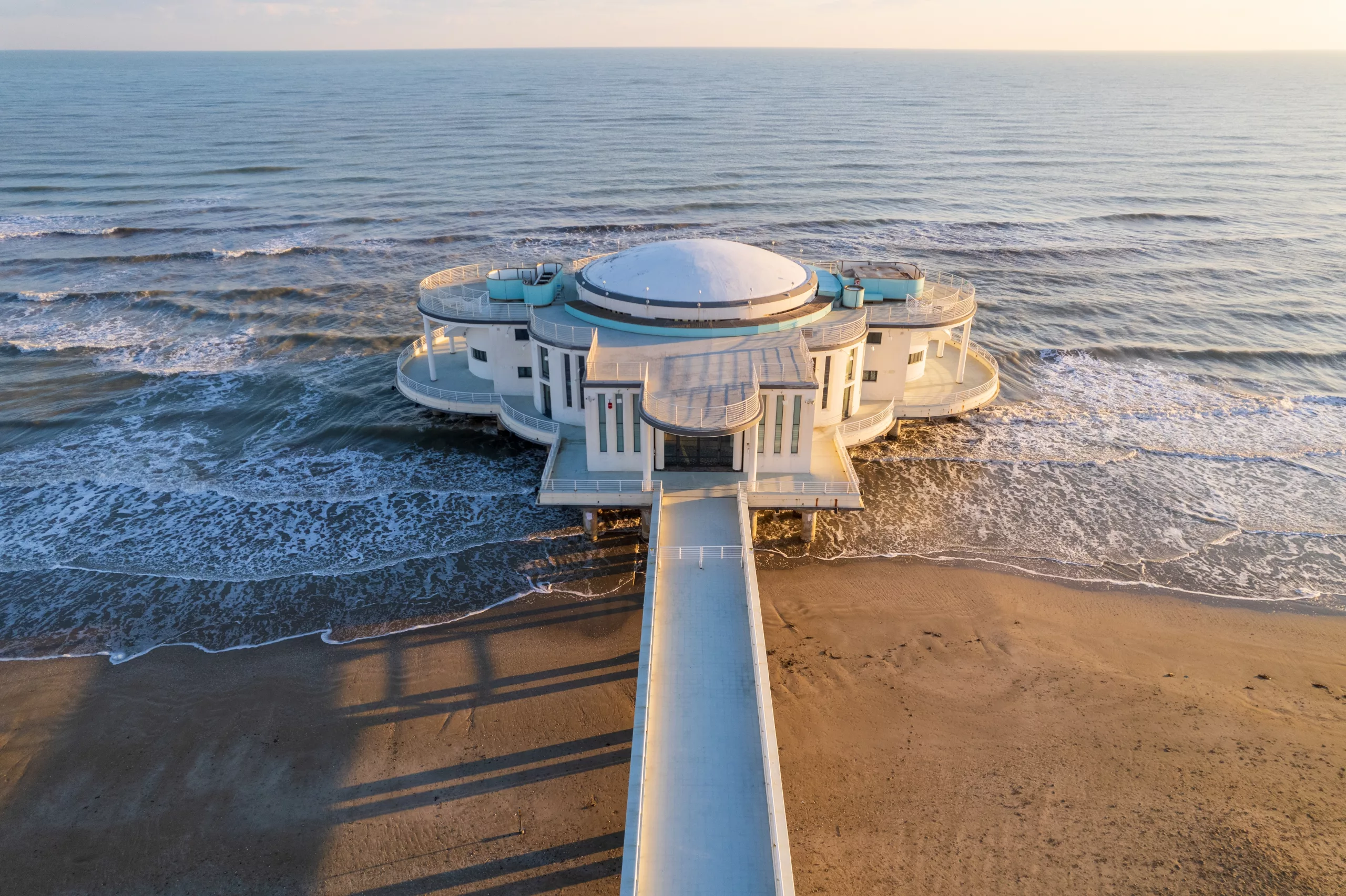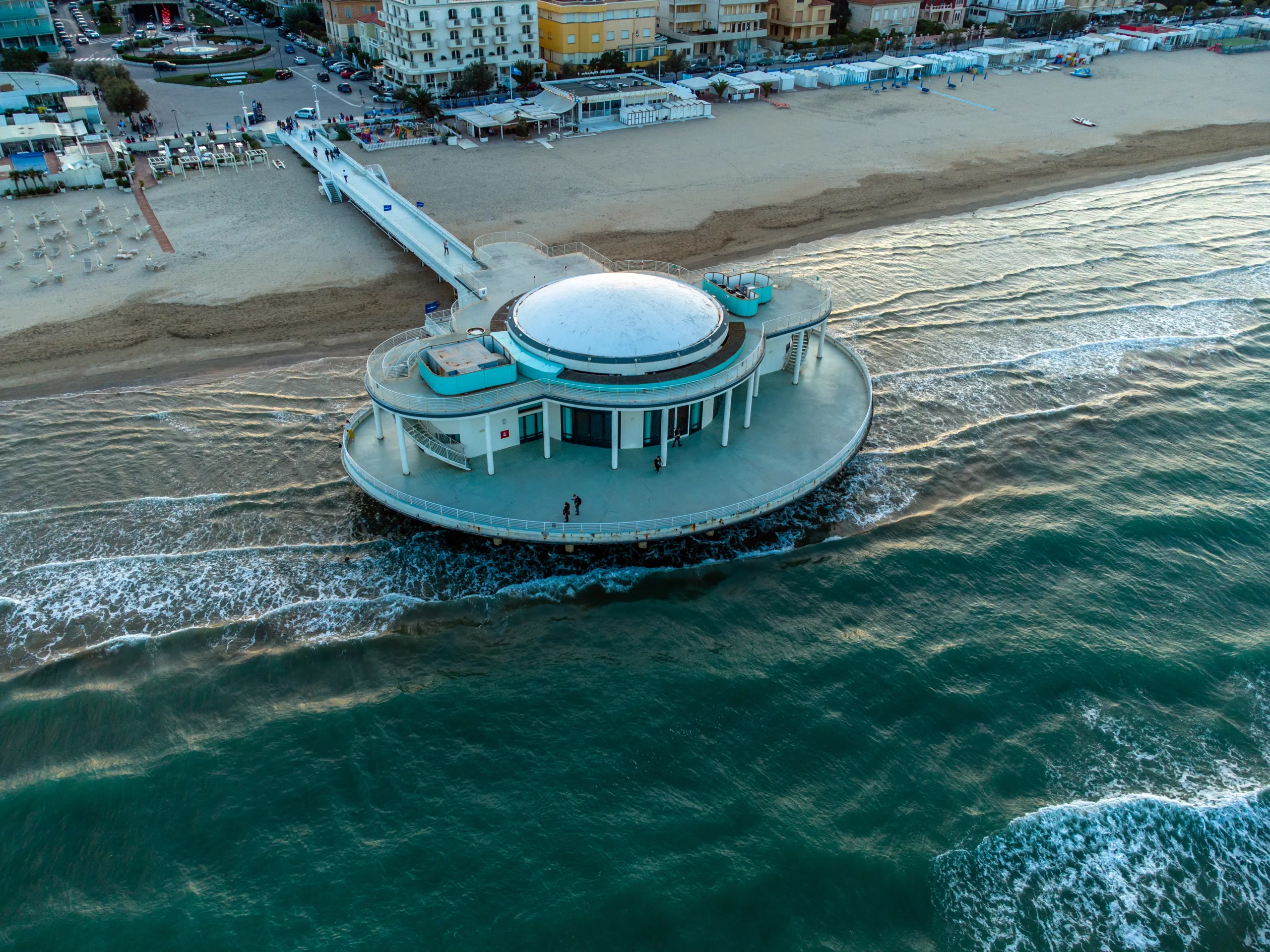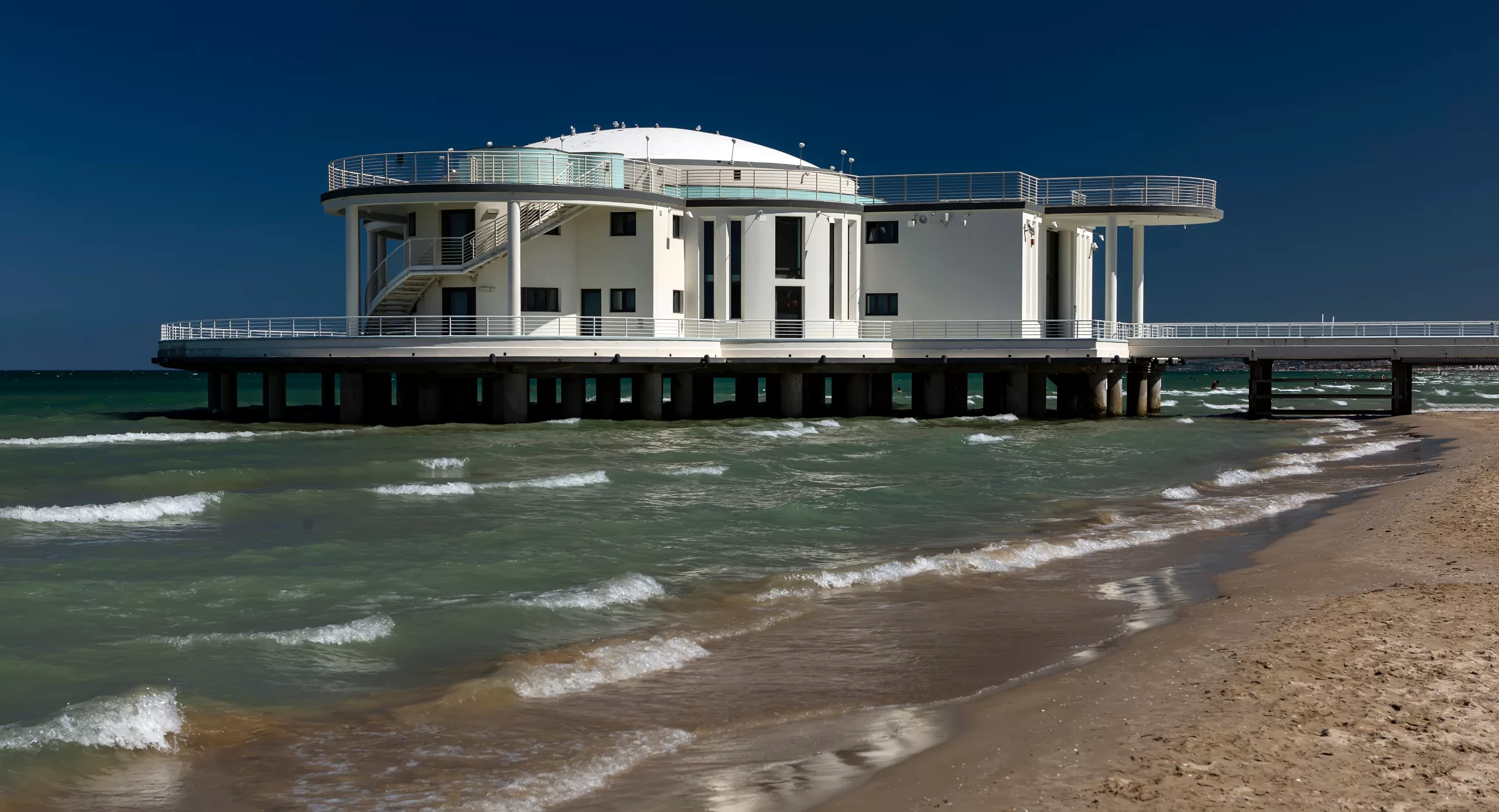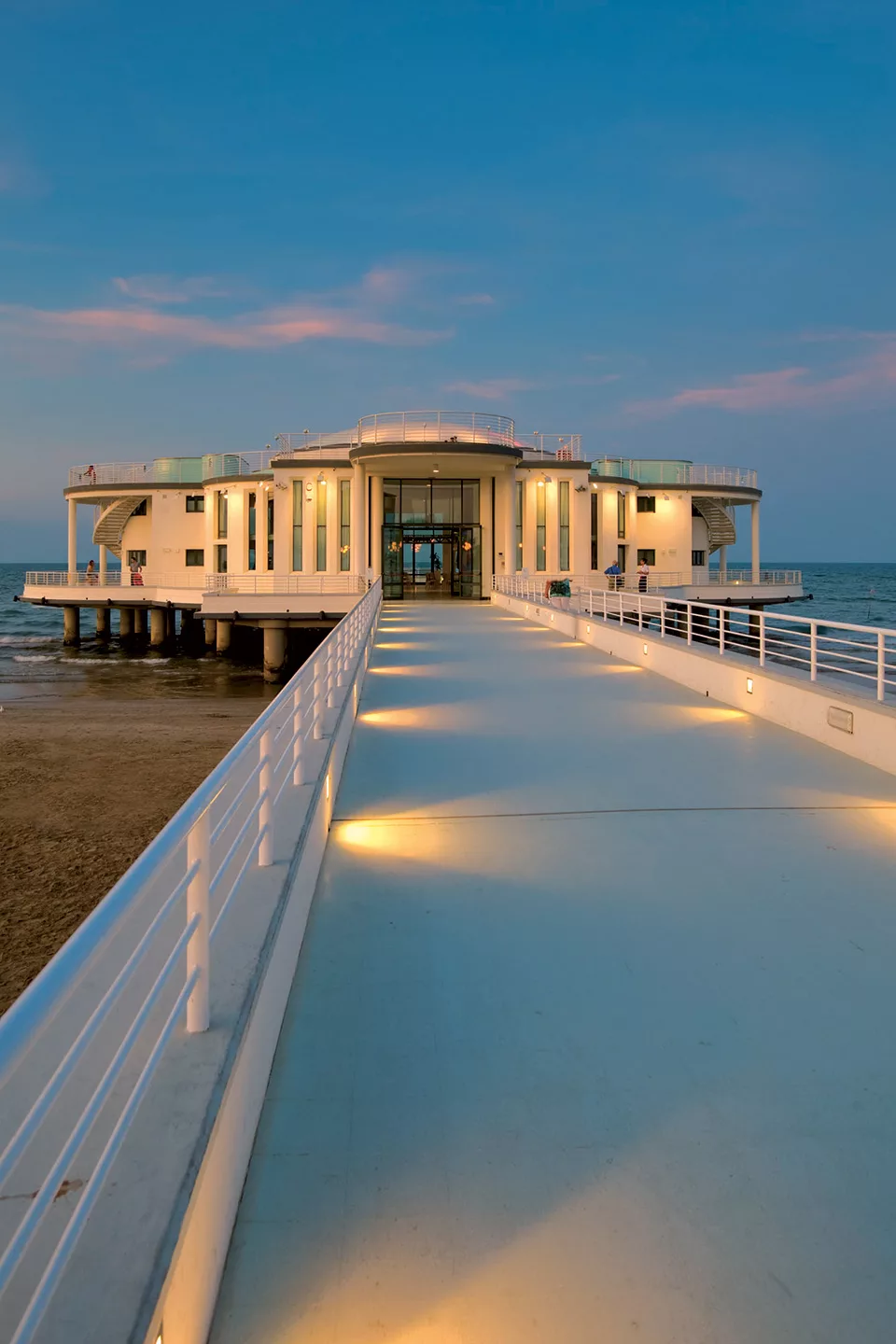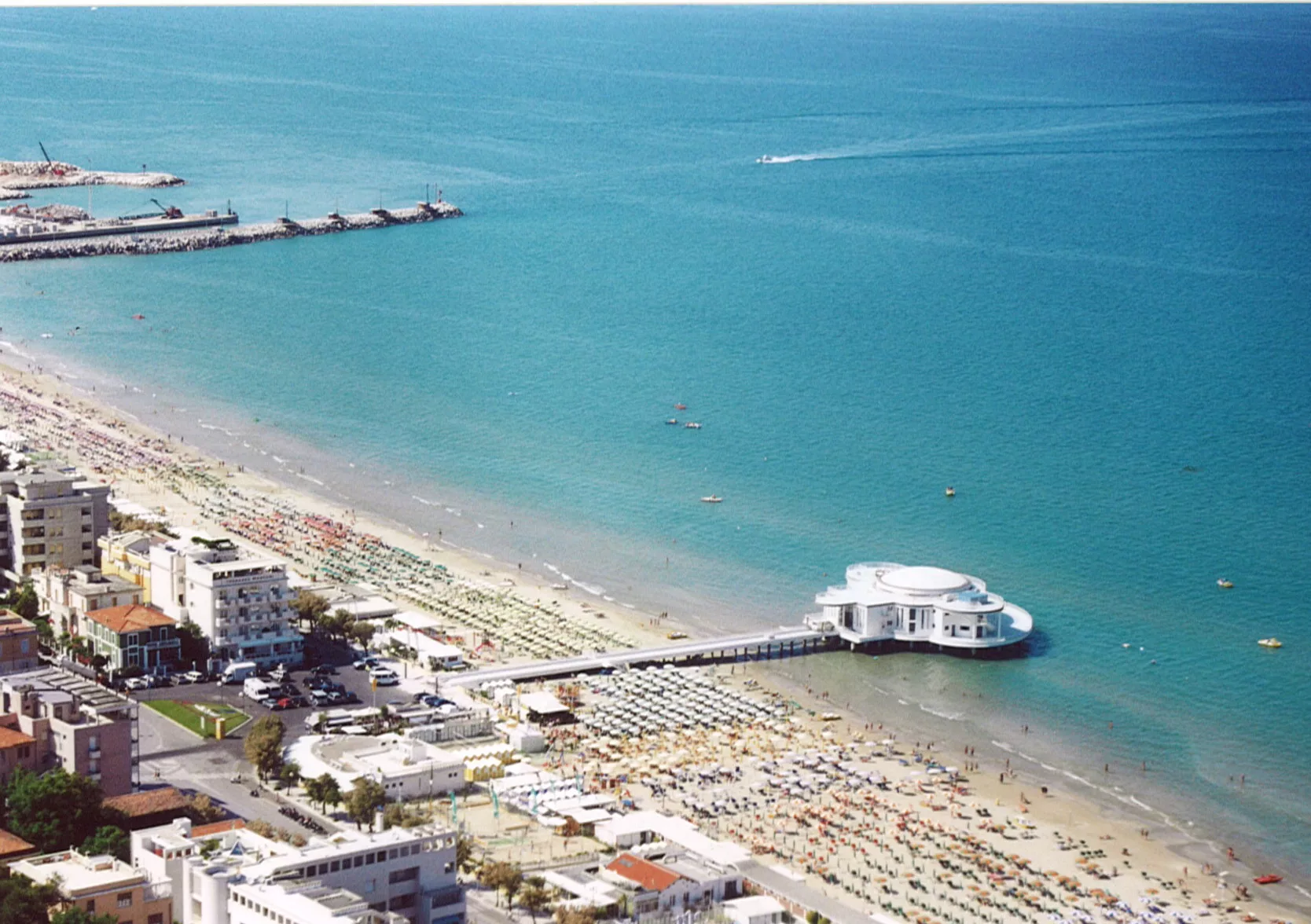
The history of the Rotonda a Mare dates back to the second half of the 19th century, when the structure was designed by architect Vincenzo Ghinelli. In 1910, the Rotonda—then located a few hundred meters north of its current position—was expanded and entrusted to private entrepreneurs, who transformed it into the “Bagni” Hotel, further renovated beginning in 1923. This intervention essentially preserved the original circular form while replacing timber elements with more durable materials, particularly in the access pier, the platform, the bathing cabins, and the promenade area, which was widened to 4 meters and extended toward the sea.
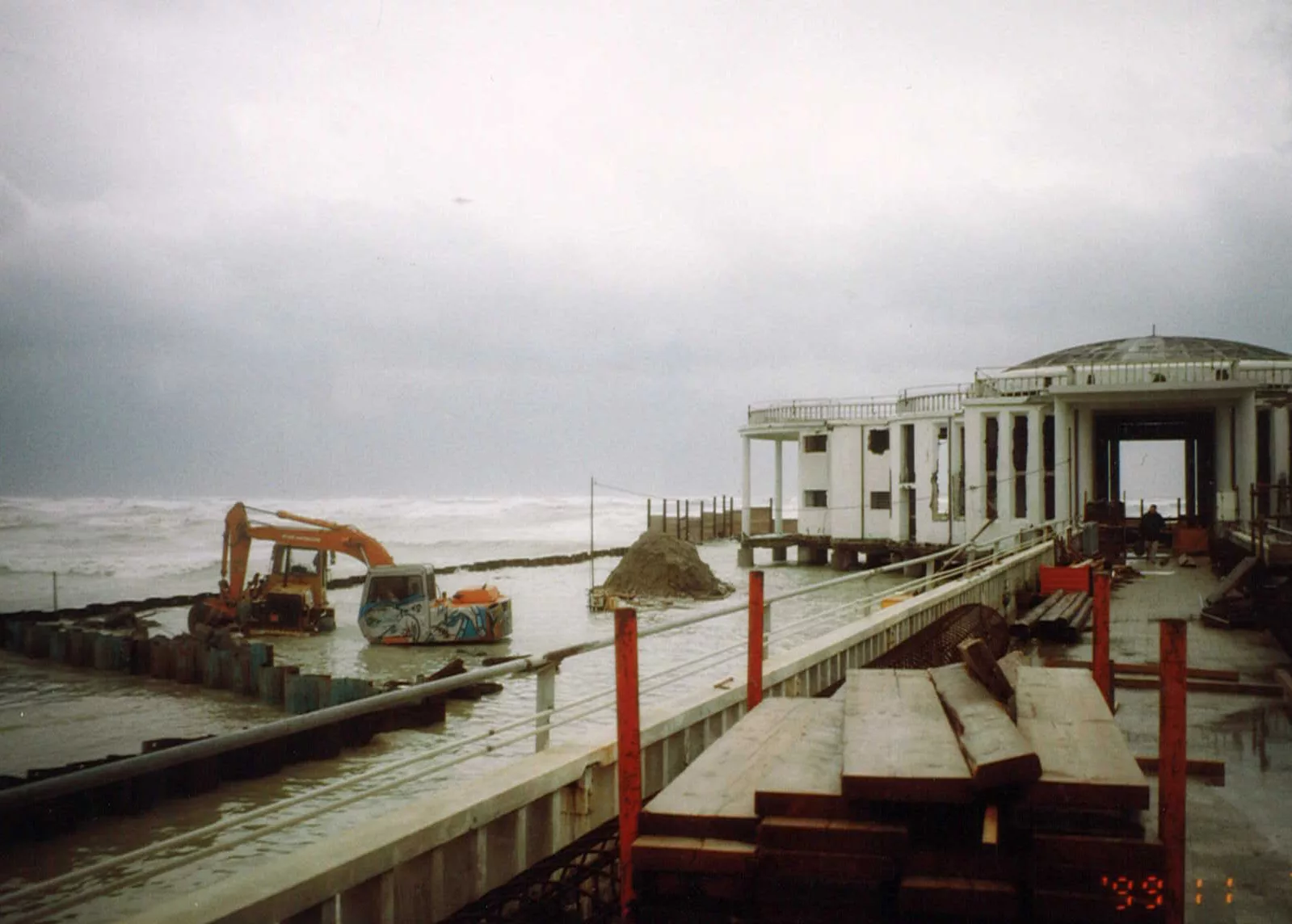
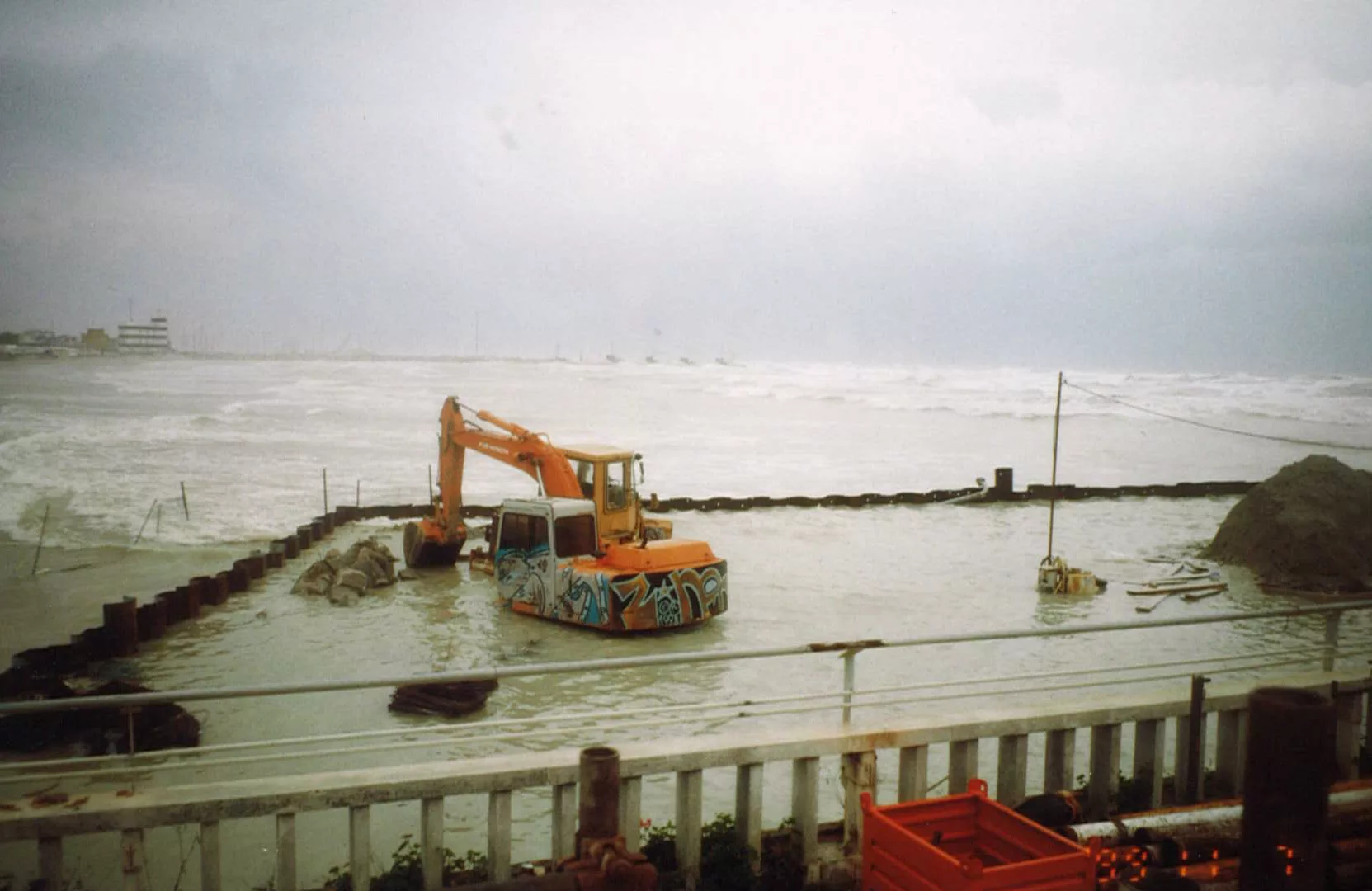
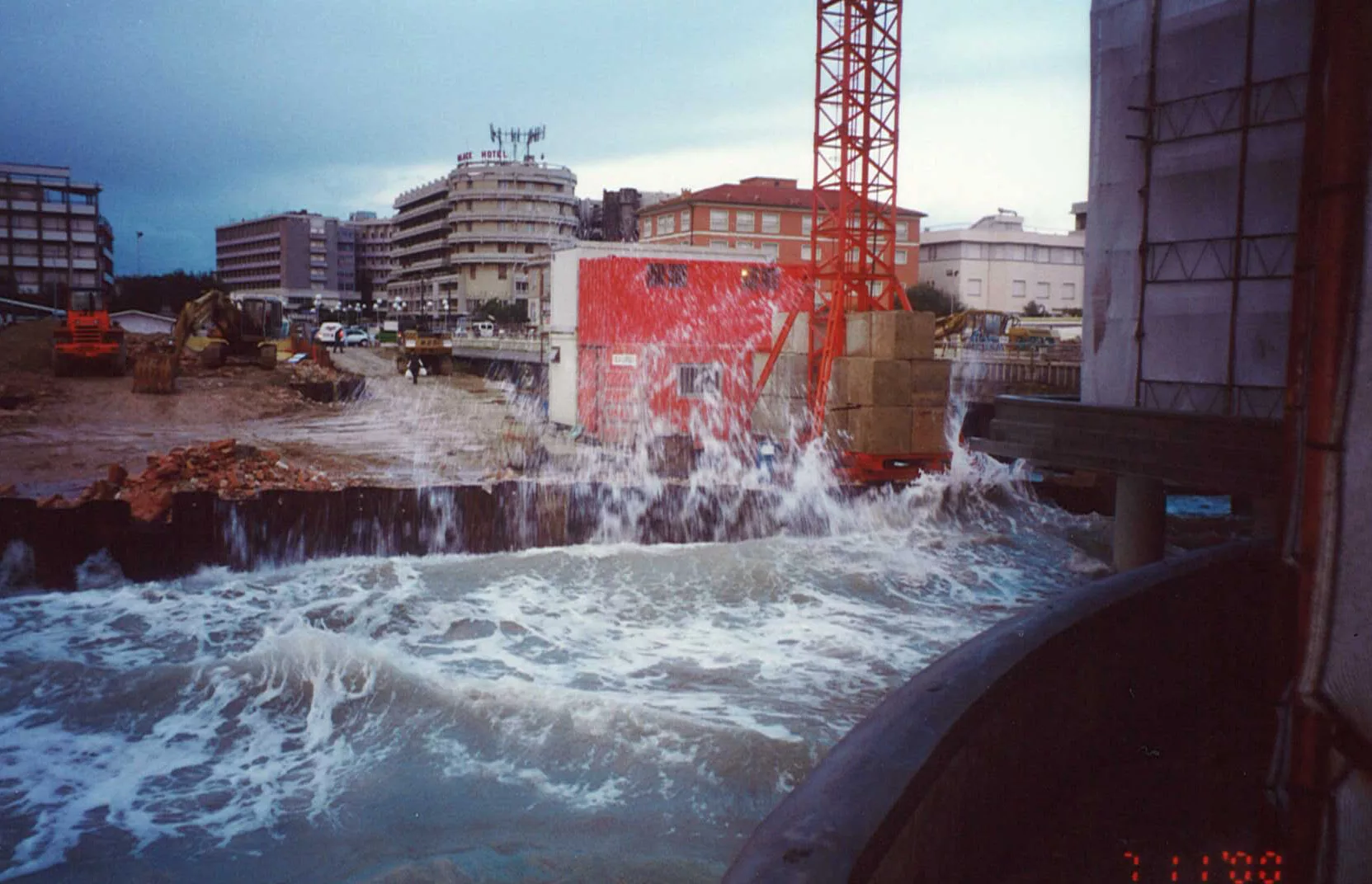
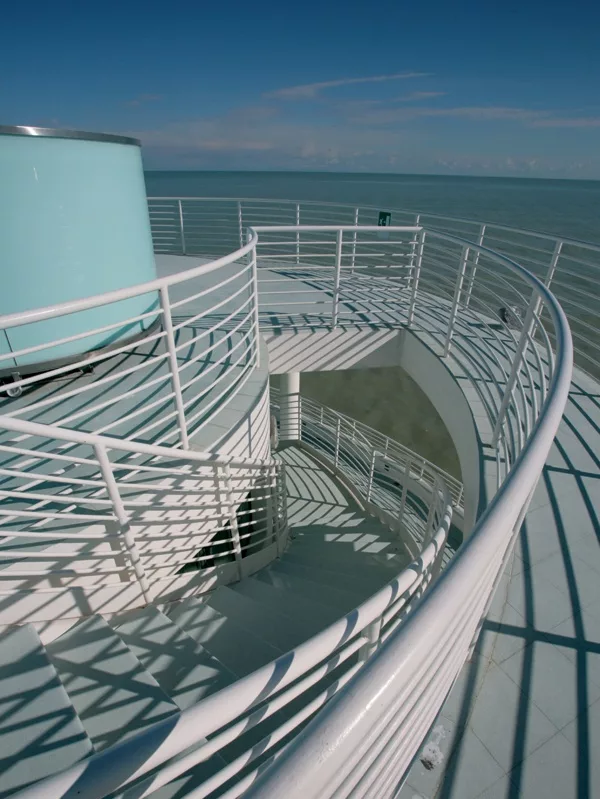
The decision to relocate the Rotonda a Mare to its current site, at Piazzale della Penna, was taken on January 30, 1932, by the Autonomous Spa and Tourism Board, which selected the project designed by engineer Enrico Cardelli. Construction works soon began, leading to the inauguration of the new structure on July 18, 1933. It quickly became renowned for its music-filled evenings, so much so that on July 7, 1935, the then Prince Umberto visited Senigallia to admire the Rotonda and inaugurate the “Colonia Marina Maria Pia di Savoia.” During the Second World War, the Rotonda was used as a military warehouse; however, once the conflict ended, it returned—especially during the 1950s and 1960s—to the center of social and cultural life, attracting numerous tourists and prominent artists. The intervention on the Rotonda a Mare in Senigallia involved the structural consolidation and architectural upgrading of one of the city’s most iconic landmarks, with the aim of preserving its historical and cultural value while ensuring its full usability. The works affected both the load-bearing structures and the internal and external spaces, through technical solutions aimed at improving safety and long-term durability. Particular attention was paid to respecting the building’s original appearance, integrating contemporary interventions in a coherent and non-invasive manner. The project thus returns to the community a building enhanced in its performance while remaining faithful to its architectural identity, strengthening its role as a public space and symbolic landmark of the Senigallia seafront.
Client:
Comune di Senigallia (AN)
Region:
Marche
Location:
Senigallia (AN)